Pine Hills Lady Bird Deed Attorney

A Pine Hills Lady Bird Deed, known formally as a Florida enhanced life estate deed, lets your home pass directly to the beneficiaries you name at your death, with no Orange County probate case on that property. Nothing changes while you are alive: you stay on title, you keep your homestead exemption, and you can rent, refinance, sell, or revoke.

Pine Hills is an unincorporated community west of Orlando. 55.4% of housing is owner-occupied, 12.1% of residents are 65 or older, the median owner-occupied home is worth $253,300, and median household income is $58,673. It is also unusually international for central Florida: 35.9% foreign-born, and 38.3% speak a language other than English at home.

For many families here the house is not part of the estate. It is the estate. So the deed has to do more than be legally correct. It has to still work years later, when someone at a title company reads it and decides: will a title company actually insure this deed?

Pine Hills Lady Bird Deed: the short version

  • What it does: names beneficiaries who receive the property automatically at death, outside probate.
  • What you keep: full control for life, including the freedom to sell or revoke.
  • Valid is not the same as insurable. A deed can satisfy the law and still stall a closing.
  • What underwriters want after a death: a recorded death certificate and an affidavit on identity, marital status and non-revocation.
  • Where deeds fail: names, legal descriptions, witnessing, spousal joinder.
  • Where it records: the Orange County Comptroller, not the Clerk of Court.

What Is a Pine Hills Lady Bird Deed?

A Pine Hills Lady Bird Deed is the common name for a Florida enhanced life estate deed recorded on property in Orange County. It names the beneficiaries, called remaindermen, who receive the property automatically at your death, while reserving to you an enhanced life estate that leaves you in complete control while you are alive.

The enhancement is the point. Under a traditional life estate deed you could not sell or mortgage without every named beneficiary signing. An enhanced life estate deed reserves the power to sell, convey, mortgage, lease and revoke without their consent.

The recording formalities come from Fla. Stat. §§ 689.01 and 695.03. The enhanced reservation itself is a creature of Florida practice and title custom rather than a statute written for it, which is the reason this page exists: an instrument that lives in title custom gets judged by title people.

See also our guide to Lady Bird Deeds versus wills, trusts and quitclaim deeds.

Pine Hills Lady Bird Deed attorney helping Orange County homeowners avoid probate

Valid Is Not the Same as Insurable

Here is the sentence that ought to be printed on every deed form sold in Florida. A deed can be validly executed and still create a title problem. Those are two separate tests, applied by different people, at different times.

Validity is a legal question: did this instrument accomplish what the signer intended? It is answered by a judge, and only if someone sues. Insurability is a commercial question: will a title underwriter put its own capital behind the proposition that the person selling this house owns it, free of anyone else's claim? That one is answered by an underwriter reading a file at the first sale or refinance after your death. Your family will almost certainly meet only the second test.

It is also the stricter test, and not because your deed is wrong. An underwriter is not deciding who should win. It is deciding whether it is prepared to be sued later. Genuine ambiguity, the kind a lawyer would happily argue about, is something it declines to insure until somebody clears it up.

In ordinary Florida practice the enhanced life estate deed is a well accepted instrument, so this page is not an argument against the deed. It is an argument for doing it carefully. What an underwriter insures is never the concept. It is the specific paper recorded in the Orange County Official Records, and four things on it get read closely: the reservation language, the names, the legal description, the execution block.

Why this matters here: Pine Hills is a modestly valued, majority owner-occupied community where the home is most of what a family has. A deed that does not survive underwriting is worse than no deed, because it substituted for a plan. A family that signed nothing knows a probate is coming. A family holding a defective deed believes it is protected until it needs to sell.

Pine Hills Estate Planning Snapshot

A majority owner-occupied, heavily international community where the house is usually the whole plan.

  • 12.1% of Pine Hills residents are age 65+
  • 55.4% of housing units are owner-occupied
  • $253,300 median value of owner-occupied housing
  • $58,673 median household income
  • 35.9% of residents are foreign-born
  • 38.3% speak a language other than English at home

A $253,300 median value against $58,673 median household income describes a market where the home is the largest thing most families own, with rarely a portfolio behind it.

The 35.9% foreign-born figure matters for a practical reason. Naming conventions differ across countries: two surnames, a maternal surname, a married name adopted after immigration, a name spelled one way on a passport and another on a license. Each produces the mismatch between a vesting deed and a later deed that an underwriter has to stop and ask about.

At 12.1% age 65 or older this is a younger market than most on this site, and planning here is often done by working-age owners for aging parents.

Demographic figures: U.S. Census Bureau QuickFacts, Pine Hills CDP, Florida (most recent American Community Survey five-year estimates available at publication).

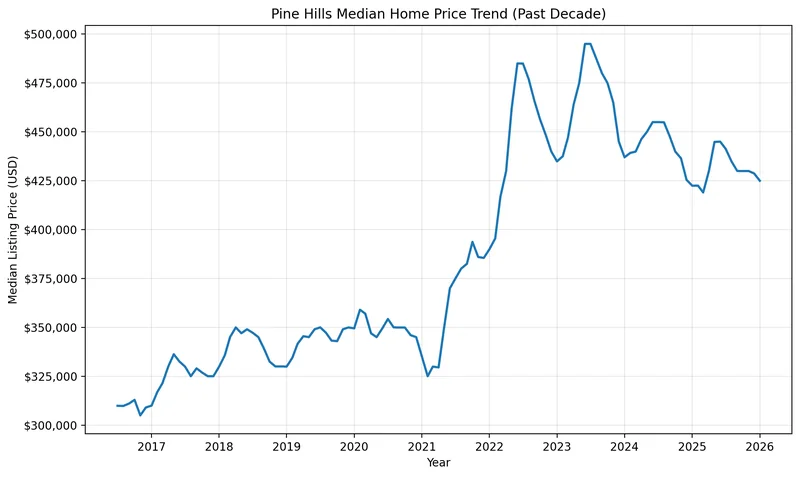
Chart of the Pine Hills median home price trend over the past decade, used for Orange County estate planning and Pine Hills Lady Bird Deed research
Pine Hills median home price trend (past decade)
The more the value has grown, the more a family stands to lose from a deed that will not insure.

What an Underwriter Actually Asks For After a Death

When the life tenant dies and a beneficiary comes to sell or refinance, the title work begins with a search of the Orange County Official Records. The deed is one link in the chain that search produces, and the underwriter's job is to satisfy itself that the link holds. Two things are requested nearly every time: a certified death certificate recorded against the property, and an affidavit from a beneficiary or someone who knew the owner well.

Recording the death certificate matters because until it is recorded, the public record still shows a living life tenant. The affidavit addresses three points, each closing a particular gap.

What the affidavit is doing, point by point.
The statementThe gap it closes
Identity of the deceased ownerConfirms the person who died is the person named in the deed and in the prior deed, whatever the difference in how the name appears.
Continuous marital statusConfirms whether the owner was married at the date of the deed and at death. A spouse appearing in between raises joinder questions.
The deed was never revokedConfirms no later instrument undid it. Because the owner reserved the power to revoke, an underwriter cannot assume it went unexercised.

Read that third row again. The very feature that makes this deed useful, your unrestricted right to change your mind, creates the underwriter's question. If you could have revoked, somebody has to say you did not. None of this is hard when the family has the documents, so keep the recorded deed, the prior deed, and a note of any name variations together, and tell somebody where they are.

Names: the Most Common Defect

Florida's public records are indexed by name. That single fact drives more title objections than any drafting subtlety, and it is why a deed has to be pedantic about your own name.

The classic version: the vesting deed says Mary A. Smith-Johnson. Twenty years later a Lady Bird Deed is signed, and because that is not what she goes by, it says Mary Smith. Both are recorded and indexed, and the record now contains a person who received property and a different person, so far as the index is concerned, who gave it away.

A searcher cannot resolve that from the record alone. It looks like a gap in the chain. It is not, of course: it is one woman with a hyphenated name she stopped using. But the underwriter is not in the family, and one that insures around an unexplained identity question takes an unpaid risk.

Fixed in the drafting, not afterwards

  • Name the owner exactly as the prior deed named them. Not the current preference, not the shortened version.
  • Recite the variation in the deed itself, so the connection appears on the face of the document.
  • Add a relationship descriptor for beneficiaries where it helps. Naming someone as a son, a daughter or a spouse distinguishes family members with similar names.
  • Name beneficiaries in full, and name contingent takers, so a beneficiary who predeceases you does not leave a hole.

In a community where 35.9% of residents are foreign-born this is not an edge case. Naming customs vary widely, but the records index does not know that. It knows strings of characters.

Why Witnessing Failures Surface at Death and Not at Signing

Florida requires a deed conveying an interest in real property to be signed in the presence of two subscribing witnesses and acknowledged before a notary public, under Fla. Stat. §§ 689.01 and 695.03. Both witnesses must actually be present when the owner signs, and both must sign themselves. The notary's function is separate and does not substitute for theirs. That is a short, unglamorous requirement, and the single most common way a home-prepared deed fails.

The scenario is always more or less the same. A form is downloaded and signed at a kitchen table, on an evening when whoever happened to be at the house was available. Perhaps one witness signs and the second signature is added later by someone who was not there. Perhaps the notary is treated as the second witness. Perhaps everybody signs, but not in the same room. The deed is then recorded without difficulty, because recording is not a validity review.

And then, for as long as the owner lives, nothing happens. No notice, no letter. The family believes the matter is handled, in good faith. The defect surfaces at the worst moment: after the death, when a title examiner reads the execution block, and the one person whose signature could have cured it is gone.

Getting the execution right

  • Two subscribing witnesses, physically present when the owner signs, both signing the deed themselves.
  • A notary public taking the acknowledgment, a separate function from witnessing.
  • The spouse joins the deed on homestead property.
  • Signing at a hospital or care facility deserves particular care, because that is where formalities get relaxed.
  • Any doubt about how a deed was signed is a reason to look at it now.

Homestead, Spousal Joinder, and What Gets Checked

A properly drafted Pine Hills Lady Bird Deed should not disturb your homestead exemption or your Save Our Homes cap during your lifetime. You retain the enhanced life estate, you remain in possession, and the Orange County Property Appraiser still treats you as the owner of record.

The two homestead concepts are worth separating, because they share a name and do different work. The homestead exemption is a property tax benefit. The constitutional homestead under Art. X, § 4, Fla. Const. is a creditor protection and a restriction on transfer, and it applies whether or not you ever filed for the tax exemption.

The constitutional side is what an underwriter reads for. A married owner cannot convey homestead without the spouse joining in the deed, whether or not the spouse appears on title, and homestead cannot be devised away from a surviving spouse or a minor child. Those restrictions are tested at death rather than at signing, which is why a deed that looked fine for fifteen years can fail at the moment it is needed.

So a homestead deed signed by one spouse alone is not an obscure technicality to a title examiner. It is a known, immediately visible defect. It is also why the affidavit asks about continuous marital status: a marriage that began after the deed was signed raises homestead questions of its own.

What a Beneficiary Can Do If an Underwriter Balks

Suppose it happens. The owner has died, a beneficiary is under contract to sell the Pine Hills house, and the title commitment comes back with a requirement nobody expected. There is a ladder of responses, worth climbing in order, because each rung costs more than the last.

  1. Supply the documents

    The affidavit on identity, continuous marital status and non-revocation, the recorded death certificate, and anything that connects a name variation. A large share of objections close here.

  2. Correct the record by agreement

    Where everyone agrees on what was intended and everyone will sign, the record can often be cleaned up without a court, through a corrective instrument or joinders.

  3. Ask what it would take

    Requirements are usually specific. Read the objection and ask what evidence would satisfy it, rather than assuming the answer is no.

  4. A court proceeding, last

    Where the record cannot be cleared any other way, a proceeding to establish the state of title is what remains. It is slower, more expensive and public. It is also precisely the outcome the deed was recorded to avoid.

When a defective deed ends in court, the family has paid for the deed, relied on it, and then paid for the thing it was meant to replace. Where a Florida estate qualifies, summary administration under Fla. Stat. § 735.201 is a shorter form of probate, and the ceiling on non-exempt assets was raised to $150,000 effective July 1, 2026 by CS/SB 1500, for deaths on or after that date. A family whose deed fails is not necessarily facing the longest road, but they are facing a road, and they were told they would not be.

Sources: Fla. Stat. § 735.201 (summary administration; non-exempt asset ceiling raised to $150,000 effective July 1, 2026 by CS/SB 1500, for deaths on or after that date). Title underwriting requirements described here reflect general Florida practice and title custom and vary by underwriter and by file.

The Two Tax Numbers That Move at Death

Two things happen to the tax treatment of the house at death, they move in opposite directions, and families routinely mistake one for the other.

The Save Our Homes assessment cap resets on the change of ownership at death. A beneficiary who moves in applies for their own homestead exemption and begins their own cap. No instrument prevents the reset: it happens the same way through a deed, through probate, and out of a trust. The stepped-up basis goes the other way, in your family's favor. Because the property remains in your gross estate, your beneficiaries' cost basis resets to the date-of-death value, which can eliminate accumulated gain on a later sale.

Which is the strongest argument against what well-meaning parents do most often: deeding the house to a child during their lifetime. That gives up the step-up and creates a present co-owner, in exchange for a probate avoidance the deed achieves without either cost. Confirm the tax treatment with a tax advisor.

Medicaid and Estate Recovery

Florida's Medicaid program is required by federal law to seek reimbursement from the estates of recipients aged 55 and over who received long-term care benefits, and the word doing the work is estate. Florida defines it narrowly: recovery reaches assets passing through the probate estate, and Florida has not adopted the expanded definition some states use.

Because a Lady Bird Deed moves the home outside probate, it is one of the standard tools for reducing estate recovery exposure on a Florida homestead. Recording it is not a transfer for the five-year look-back, because nothing leaves your control during your lifetime. But the protection depends on the deed actually operating at death. A deed that has to be sorted out in court has not quietly moved the house outside probate at all.

The limits

  • The deed does not qualify anyone for Medicaid. Eligibility is a separate analysis.
  • The five-year look-back applies to transfers of non-homestead assets.
  • Protection depends on the home keeping homestead status and passing to heirs.

Our full write-up is on the Florida Lady Bird Deed and Medicaid page.

Sources: 42 U.S.C. § 1396p; Fla. Stat. §§ 409.910 and 409.9101; Art. X, § 4, Fla. Const.

Recording a Pine Hills Lady Bird Deed in Orange County

Start with the local quirk, because it trips up people who have recorded elsewhere in Florida. Deeds in Orange County are recorded by the Orange County Comptroller, Official Records Department, not by the Clerk of Court. The office is at 109 East Church Street, Suite 300, Orlando, Florida 32801. The recording office varies by county and the offices are not interchangeable, so a deed sent to the wrong one comes back rather than getting recorded.

Pine Hills is unincorporated, and it does not matter here

Pine Hills is a census designated place rather than an incorporated city, so there is no Pine Hills city hall and no municipal clerk involved in your deed. People sometimes assume that makes their situation more complicated. It does not. Recording and property assessment are both county functions. Your deed is recorded by the Orange County Comptroller and your homestead exemption is administered by the Orange County Property Appraiser, exactly as for a property inside Orlando city limits.

Execution requirements

Florida requires a deed to be signed in the presence of two subscribing witnesses and acknowledged before a notary public (Fla. Stat. §§ 689.01 and 695.03). Recording a deed does not validate it, and the Official Records Department is not reviewing whether the execution was proper.

Recording fees and documentary stamp tax

Recording charges are $10.00 for the first page, $8.50 for each additional page, and $1.00 per name indexed beyond four names. Orange County applies the standard statewide documentary stamp rate of $0.70 per $100 of consideration on taxable deeds.

Whether the tax applies to this deed at all was addressed in Technical Assistance Advisement 20B4-004 (October 16, 2020), in which the Florida Department of Revenue concluded that an enhanced life estate deed is not subject to documentary stamp tax, because no present beneficial interest transfers when the deed is signed. A Technical Assistance Advisement binds the Department only as to the taxpayer and facts presented. Where the property carries a mortgage, the analysis turns on whether there is consideration.

Sources: Orange County Comptroller, Official Records Department (109 East Church Street, Suite 300, Orlando, Florida 32801; deeds are recorded by the Comptroller rather than the Clerk of Court; the recording office varies by county and the offices are not interchangeable); Florida Department of Revenue Technical Assistance Advisement 20B4-004 (Oct. 16, 2020); Fla. Stat. ch. 201; Fla. Stat. § 28.24(13) (statutory service charges); Fla. Stat. §§ 689.01, 695.03.

After a Death: What Your Family Actually Does

  1. Order certified death certificates

    From the Florida Department of Health. Order several: the Property Appraiser, the insurer and any lender will each want one.

  2. Record one against the property

    Recorded with the Orange County Comptroller, this establishes publicly that the enhanced life estate has ended.

  3. Prepare the affidavit before it is asked for

    Identity, continuous marital status, and confirmation that the deed was never revoked.

  4. Give the title company the full chain

    The recorded deed, the prior vesting deed, and anything explaining a name change.

  5. Apply for their own homestead exemption

    A beneficiary who moves in applies in their own name with the Orange County Property Appraiser, and should expect the property to be reassessed on the change of ownership.

What is not on that list, when the deed holds up: a petition, a filing fee, a personal representative, publication of notice to creditors, or a creditor claim period for that property.

What a Lady Bird Deed Does Not Do

Common misconceptions, several about what recording accomplishes.
People assume it…Reality
Is validated by being recordedNo. Recording puts a document in the public record. It is not a review of whether it is any good.
Guarantees a title company will insureNo. Underwriters accept the instrument, but they insure the specific document, not the concept.
Means no paperwork at deathNo. Expect a recorded death certificate and an affidavit at minimum.
Passes your Save Our Homes cap to the kidsNo. It resets on the change of ownership at death.
Covers the whole estateOnly the real property described in it.
Replaces a willNo. You still want a will for everything the deed does not cover.
Overrides homestead restrictionsNo. Spousal joinder and the restriction on devising homestead still apply.
Qualifies you for MedicaidNo. It does not create eligibility.
Stops your children arguingNo. Any co-owner can generally seek partition.

How a Pine Hills Lady Bird Deed Compares to the Alternatives

General comparison for a Florida homestead, with the title question added.
OptionAvoids probate?Keeps stepped-up basis?What an underwriter needs laterTypical drawback
Lady Bird DeedYes, for that propertyYesRecorded death certificate and an affidavitCovers only the property described in it, and the drafting has to be right.
Will onlyNoYesA probate order establishing who takesGuarantees an Orange County probate case on the house.
Revocable living trustYes, if fundedYesTrust documentation and successor trustee evidenceHigher cost, but better where you want to direct a sale.
Deed the home to the kids nowYesNoLittle, but the damage was done at signingLoses the step-up and creates present co-owners.
Traditional life estate deedYesYesSimilar evidence at deathYou cannot sell without every beneficiary signing.
Doing nothingNoYesA probate orderAt least the family knows where it stands.

The last row is not a joke. A family with no deed knows a probate is ahead of it. A family with a defective deed believes nothing is ahead of it, and finds out otherwise under a closing deadline. A deed that does not survive underwriting did not merely fail, it displaced the plan that would have worked. Our fuller breakdown is on the comparison page.

How to Get a Pine Hills Lady Bird Deed

  1. Pull the last recorded deed

    From the Orange County Comptroller's Official Records. Everything else is copied forward from it.

  2. Match the owner's name exactly

    As the prior deed wrote it, with any variation recited in the new deed.

  3. Carry the legal description forward verbatim

    Copied, then read back against the source.

  4. Identify beneficiaries clearly

    Full names, a relationship descriptor where it helps, and contingent takers named.

  5. Draft the enhanced life estate reservation

    Reserving your power to sell, convey, mortgage, lease and revoke without the beneficiaries' consent.

  6. Address homestead and spousal joinder

    A married owner's spouse joins the deed, whether or not they are on title.

  7. Sign with two witnesses and a notary

    Both witnesses actually present, both signing.

  8. Record with the Orange County Comptroller

    109 East Church Street, Suite 300, Orlando, Florida 32801. Not the Clerk of Court.

  9. Leave the file where your family can find it

    The recorded deed, the prior deed, and a note of any name variations.

START WITH A CONSULTATION

Plain-English Glossary

Enhanced life estate deedThe formal name for a Lady Bird Deed. A life estate plus the power to sell, mortgage or revoke.
Title underwriterThe company that decides whether to insure a transaction, and on what conditions.
Insurable titleTitle an underwriter is willing to insure. Stricter than title that is merely valid.
Cloud on titleAnything in the record that raises a question about ownership.
Chain of titleThe sequence of recorded documents by which the property passed from owner to owner.
Vesting deedThe last recorded deed that put the property into the current owner's hands.
Subscribing witnessA person who watches the owner sign and then signs. Florida requires two.
Spousal joinderA spouse signing so that homestead can be conveyed, on title or not.
Census designated placeA community counted as a place though not an incorporated city.
Stepped-up basisThe reset of cost basis to date-of-death value, eliminating gain on a later sale.

Pine Hills Neighborhoods We Serve

We prepare Lady Bird Deeds throughout Pine Hills and unincorporated Orange County, including:

  • Pine Hills
  • Rosemont
  • Lake Lawne
  • Robinswood
  • Powers Park
  • Hiawassee
  • Silver Star Road corridor
  • West Colonial corridor
  • Orlo Vista
  • Washington Shores
  • Richmond Heights
  • Malibu Groves
  • Barnett Park
  • Lake Mann
  • Johns Landing
  • Clarcona border
  • Ocoee border
  • Apopka border
  • MetroWest border
  • Pine Hills Road corridor

Work With a Pine Hills Lady Bird Deed Attorney

Yanitza Schoonover focuses her practice on probate and estate planning for Florida families, helping Pine Hills homeowners with:

  • Pine Hills Lady Bird Deed drafting, execution and recording
  • Deeds drafted to survive title underwriting years later
  • Formal and summary probate administration
  • Estate planning coordination for Florida homesteads


If the house is the main thing your family has, the deed has to be right the first time. We will read the deed you already have, or draft one that will hold.

Schedule Your Consultation
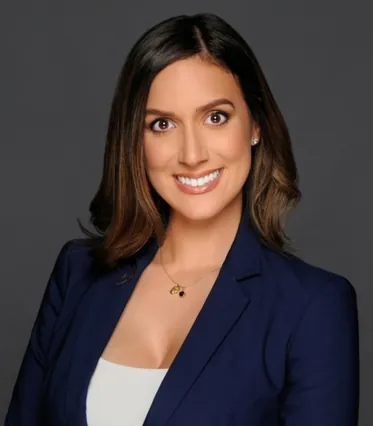
Pine Hills Lady Bird Deed attorney Yanitza Schoonover

Yanitza Schoonover

Pine Hills Lady Bird Deed Frequently Asked Questions

Will a title company actually insure a Lady Bird Deed in Florida?

In ordinary practice yes. Florida underwriters have long treated the enhanced life estate deed as an accepted instrument. But they insure the specific document recorded in the Orange County Official Records, not the concept. They read the reservation language, the names, the legal description and the execution block. A well drafted deed clears that review with an affidavit and a recorded death certificate. A sloppy one stalls a closing.

What is the difference between a valid deed and an insurable deed?

Validity is a legal question about whether the instrument did what the signer intended. Insurability is a commercial question about whether an underwriter will put its own money behind the state of the title. The second test is stricter. An underwriter is not deciding who is right, it is deciding whether it can be sued later, and it resolves ambiguity by declining to insure.

What does a title underwriter ask for after the life tenant dies?

Two things. A certified death certificate recorded against the property in the Orange County Official Records, which puts the ending of the life estate on the public record. And an affidavit, usually from a beneficiary, confirming the identity of the deceased owner, continuous marital status from the date of the deed through death, and that the deed was never revoked.

Why does the name on the deed have to match the prior deed exactly?

Because the public records are indexed by name, and an underwriter has to be satisfied that the person who received the property is the person who later gave it away. A deed naming Mary Smith when the vesting deed says Mary A. Smith-Johnson raises a question no search can answer. Name the owner exactly as the prior deed names them, and recite any variation in the new deed.

Can the legal description be retyped or shortened?

It should be copied forward from the last recorded deed, not retyped from memory or abbreviated to a street address or a parcel number. A street address is not a legal description, and a parcel number is an appraiser's convenience. Retyping invites a transposed lot number or a wrong plat book page, and a description that does not match the chain is a cloud on title.

What happens if the deed was not properly witnessed?

Florida requires a deed to be signed in the presence of two subscribing witnesses and acknowledged before a notary public, under Fla. Stat. §§ 689.01 and 695.03. Both witnesses must actually be present and must sign. The problem is the timing: nothing goes wrong while the owner is alive, and the defect surfaces at death, when the one person who could have signed a corrective deed is gone.

Does my spouse have to sign a Pine Hills Lady Bird Deed?

On homestead property a married owner cannot convey without the spouse joining in the deed, whether or not the spouse appears on title, under Art. X, § 4, Fla. Const. Homestead also cannot be devised away from a surviving spouse or a minor child, and those restrictions are tested at death. A deed signed by one spouse alone is a known defect an underwriter checks for.

Where is a Pine Hills Lady Bird Deed recorded?

With the Orange County Comptroller, Official Records Department, at 109 East Church Street, Suite 300, Orlando, Florida 32801. Orange County records deeds through the Comptroller rather than the Clerk of Court, which is where most Florida counties record them. The recording office varies by county and the offices are not interchangeable.

Pine Hills is not a city. Does that change anything?

Not for this. Pine Hills is a census designated place rather than an incorporated municipality, so there is no city hall involved in your deed. It does not matter, because recording and property assessment are county functions. Your deed goes to the Orange County Comptroller and your homestead exemption to the Orange County Property Appraiser, exactly as for a property inside Orlando city limits.

What can a beneficiary do if an underwriter still will not insure?

There is a ladder, worth climbing in order. First, documentary: supply the affidavit, the recorded death certificate, and anything that connects a name variation or clarifies the description. Many objections close there. Second, corrective: where everyone agrees on what was intended, the record can often be cleaned up by agreement. Third, a court proceeding to establish title, which is precisely the outcome the deed was recorded to avoid.

Does a Pine Hills Lady Bird Deed protect the home from Medicaid estate recovery?

Florida limits Medicaid estate recovery to assets passing through the probate estate and has not adopted the expanded definition some states use, so a Lady Bird Deed that moves the home outside probate is a standard tool for reducing exposure on a Florida homestead. The deed does not create eligibility, the five-year look-back still applies to non-homestead transfers, and protection depends on the home keeping homestead status and passing to heirs. See our Medicaid guide.

More general questions are answered on our Florida Lady Bird Deed FAQ page.

We also assist homeowners across Florida including Orlando, Daytona Beach, Tampa, Saint Petersburg, Jacksonville, and Miami. Browse every market on our areas we serve page.

Florida Lady Bird Deed Attorney Serves Homeowners Across Florida

We help homeowners throughout Florida with Lady Bird Deeds and probate avoidance planning. Below are many of the primary Florida markets we serve, but we're not limited to these locations. You can also browse the full Florida Lady Bird Deed city and county directory.

Boca RatonBoynton BeachCape CoralClearwaterCoral SpringsDavieDaytona BeachDeerfield BeachDoralFort LauderdaleHallandale BeachHialeahHollywoodHomesteadJacksonvilleKendallLauderdale LakesMiamiMiami BeachMiramarOrlandoParklandPembroke PinesPine HillsPlantationPompano BeachPort Saint LucieSaint PetersburgSunriseTallahasseeTampaWest Palm BeachWeston

Legal disclaimer. This page is general information about Florida law, not legal advice, and reading it does not create an attorney-client relationship. Title insurance requirements described here reflect general Florida practice and title custom, and vary by underwriter and by file. Whether a particular deed is insurable depends on the exact language recorded and on the circumstances of the owners. Recording locations, fees, tax rates and court procedures described were accurate as of August 2026 and should be confirmed with the Orange County Comptroller, the Orange County Property Appraiser and the Florida Department of Revenue.

The Schoonover Law Firm, P.A. · Yanitza Schoonover, Attorney at Law · Licensed in Florida. Attorney advertising.